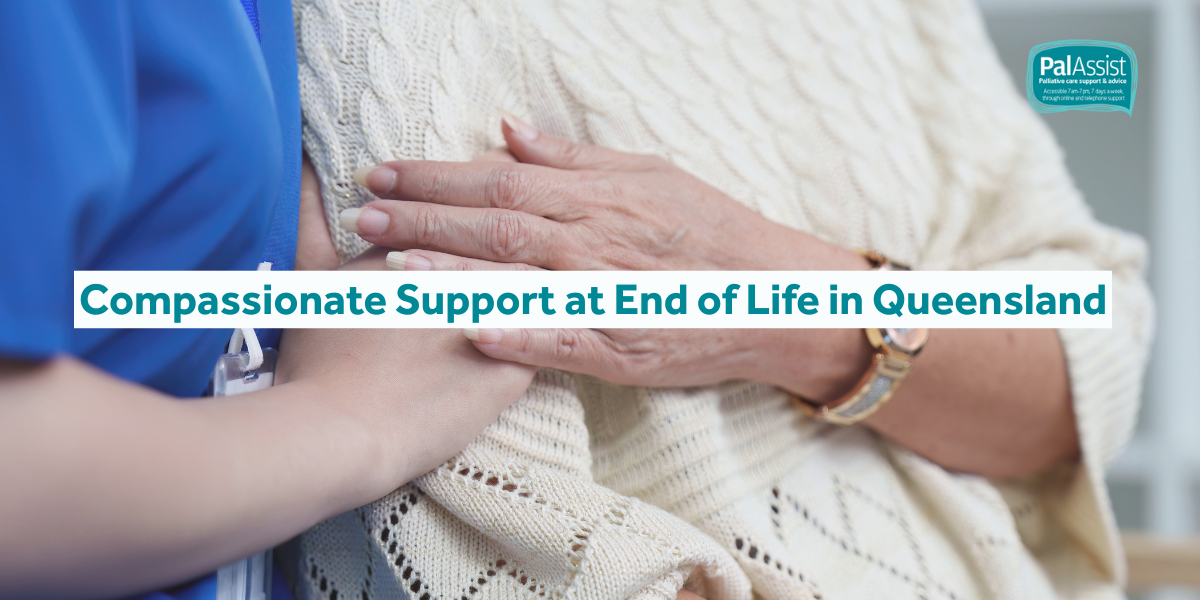
Compassionate Support at End of Life in Queensland

When someone you care about receives a diagnosis of a serious illness, the questions start flooding in straight away. Where do we turn? How do we make sure they’re comfortable? These feelings of uncertainty are completely normal.
At the same time, many families across Queensland don’t realise the range of palliative care services available to support loved ones through serious illnesses. But the truth is, compassionate support exists from the moment of diagnosis, not just in the final stages of life.
We at PalAssist connect families with palliative care at home in Queensland and other essential services. Our registered nurses support Queensland families through this journey every day, so we know what questions arise and when you need guidance most.
In this article, you’ll learn about:
- What palliative care means in Queensland
- Where to access services near you
- Who can provide specialist support
- How planning supports your family
Read on to explore the compassionate care available when your loved ones need it.
Palliative Care in Queensland: Not Just End-of-Life Support
Palliative care in Queensland begins at the diagnosis of any serious illness.

Put simply, it’s specialised health care that aims to improve the quality of life when someone faces a life-limiting illness. The focus is on easing physical pain, managing psychological and emotional suffering, and respecting spiritual values throughout the illness.
Many people think palliative care only happens when someone is dying. That’s not how it works in practice. You can receive this type of care alongside your regular medical treatment from the start.
Also, health professionals work together to control symptoms, provide emotional support for families, and help coordinate care between your different doctors.
Bottom Line: Palliative care supports the best possible quality of life at every stage, not just preparing for death.
Where Can You Access Palliative Care Services?
You can receive palliative care services in your home, at a hospital, in a hospice or at an aged care facility across Queensland. The location depends on what level of care the person needs and where they feel most comfortable.

In our experience, most families start with support at home and adjust as needs change. Over time, care location might change as symptoms progress or stabilise, ensuring you get the right support at each stage.
Each option below shows how care works, making it easier to decide what fits best.
Care in Your Own Home
Home-based palliative care lets you receive medical support in your own familiar surroundings. This is why many carers and family members prefer this option.
Community health teams visit regularly to manage symptoms, check on comfort levels, and provide practical guidance. Even Queensland Health can arrange equipment like hospital beds or oxygen to support care at home when needed.
Hospital and Hospice-Based Support
Sometimes symptoms need more intensive management than what’s possible at home. That’s why specialist palliative care units exist in hospitals across the state.
Specialist palliative care units in hospitals have the resources and expertise to handle complex pain or other difficult symptoms. So, patients receive around-the-clock specialist care focused entirely on comfort and peace. Similarly, hospices create quiet, supportive spaces dedicated to end-of-life care for people in their final weeks or days.
Keep in Mind: Most services through Queensland Health are free with a Medicare card, though you may need to pay for hiring some specialist equipment.
Who Provides Specialist Palliative Care Across Queensland?
Palliative care across Queensland comes from your GP, community nurses and specialist teams trained in managing complex symptoms. Your regular health professionals often provide the first layer of care, while specialist palliative care providers step in when symptoms become harder to control.
Understanding the different levels of support helps you know who to contact as needs change.
Health Professionals and Community Teams
Your local GP and community nurses can manage pain, provide emotional support, and keep an eye on how symptoms change over time. These professionals know your medical history already, which helps them coordinate care with other doctors involved in treatment.
Then specialist teams include palliative care doctors, nurses with advanced training, and allied health professionals like social workers and counsellors. This range of expertise means they can address physical symptoms, psychological needs, and spiritual concerns.
Cultural support services and organisations across Queensland also ensure you receive respect for your beliefs and values during your care.
Accessing Specialist Services Through Referral
The advantage of specialist palliative care teams is that they have advanced training in controlling difficult symptoms and complex medical situations (something most people don’t realise until they need it). You need a referral from your GP or specialist to access these teams.
For families living further from major hospitals, specialist support comes through telehealth video consultations with the SPaRTa service. Young people and children with life-limiting illnesses receive specialised care through paediatric palliative care services.
Once you understand who can help, the next step is knowing how to plan ahead for the care you want.
Understanding Advanced Care Planning for End-of-Life
What happens if you can’t communicate your treatment wishes during a medical crisis? Well, without documentation, health professionals and family members must guess what you’d want. That’s why advance care planning is so important.
Advance care planning means documenting your preferences for future medical treatment before crisis situations arise (sounds overwhelming, we know). These conversations help health professionals understand your treatment priorities, values, and what quality of life means to you during serious illness.
The talk doesn’t have to happen all at once. Many families discuss wishes gradually over time with their doctor, involving friends and everybody who might need to make decisions down the track.
What’s more, Queensland Health provides clinical resources and planning documents to guide these important discussions in the right context. Some people at any age want to address topics like voluntary assisted dying separately, which is different from palliative care and end-of-life care.
Bottom Line: Having your preferences documented means health professionals can respect your choices about treatment, dying, and death when you can’t speak for yourself.
See also: Beyond Aesthetics: Surprising Health Perks of Dental Implants
Finding Support When You Need It Most
Getting connected with support services early means you’ll have guidance before situations become overwhelming. We’ve found that reaching out sooner rather than later makes the journey less stressful for everybody involved.
PalAssist provides free phone and online chat support from registered nurses seven days a week, operating from 7 am to 7 pm. Our team can answer questions about symptoms, connect you with local palliative care services and resources, and help you understand what support exists across Queensland.You don’t need a referral to contact us, and reaching out early means getting compassionate support sooner. Call 1800 725 277 or visit our website to connect with our team today.